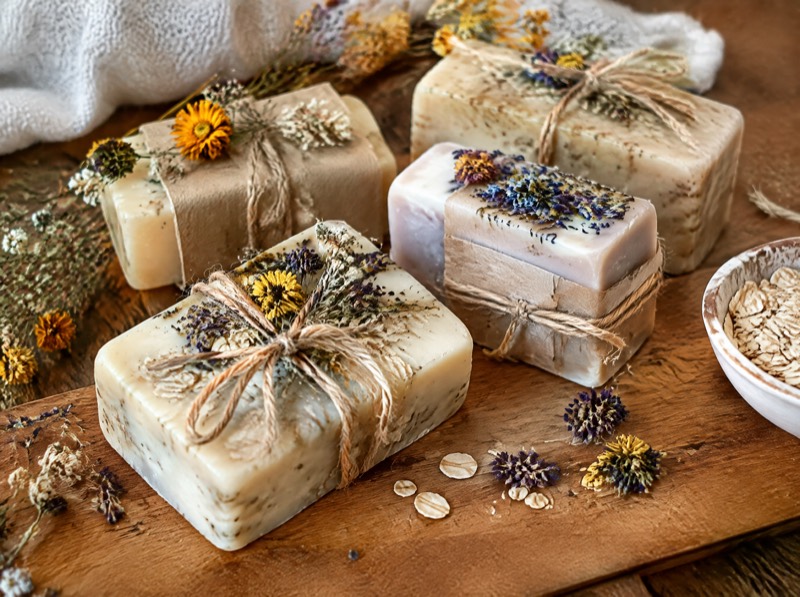
Oils, lye, time. Cold-process soap has a reputation for complexity, but the best bars come from restraint, patience and good ingredients.
Soap has a mystique — cauldrons, curing racks, the alchemy of lye — that makes it seem harder than it is. The truth is that the simplest recipe, made carefully, beats any elaborate one. Good soap is oil, water, lye and time. Everything else is decoration.
The basic chemistry
Saponification is the reaction between a fat and an alkali: oils plus lye (sodium hydroxide) become soap and glycerine. Get the proportions wrong and you get either harsh soap or a greasy brick. Use a soap calculator — never a recipe from memory — and weigh everything to the gram. This is the one part of soapmaking where precision is non-negotiable.
A good beginner recipe
Olive oil for gentleness, coconut oil for lather, shea butter for creaminess. A classic ratio is 60% olive, 25% coconut, 15% shea, with a superfat of 5% — meaning 5% of the oils remain unsaponified, which makes the bar kinder to skin. Add essential oil at the end for scent, and dried petals for texture, but keep both modest: they are the seasoning, not the meal.
Safety, briefly and seriously
Lye is caustic. Gloves, goggles, long sleeves, ventilation. Always add lye to water — never water to lye. Work away from children and pets. This is not a reason to avoid soapmaking; it is a reason to be boring about safety every single time.
The cure is the magic
New soap is harsh and soft. Four to six weeks on a rack, turned once a week, lets the water evaporate and the pH settle. A cured bar lasts longer, lathers better, and is genuinely kind to skin. The waiting is the whole craft — and it cannot be rushed.
Keep the recipe simple
Every ingredient you add changes the chemistry. A simple, well-cured bar with a single essential oil will outperform a complicated one that was rushed. Start simple. Perfect it. Then, and only then, add the petals.