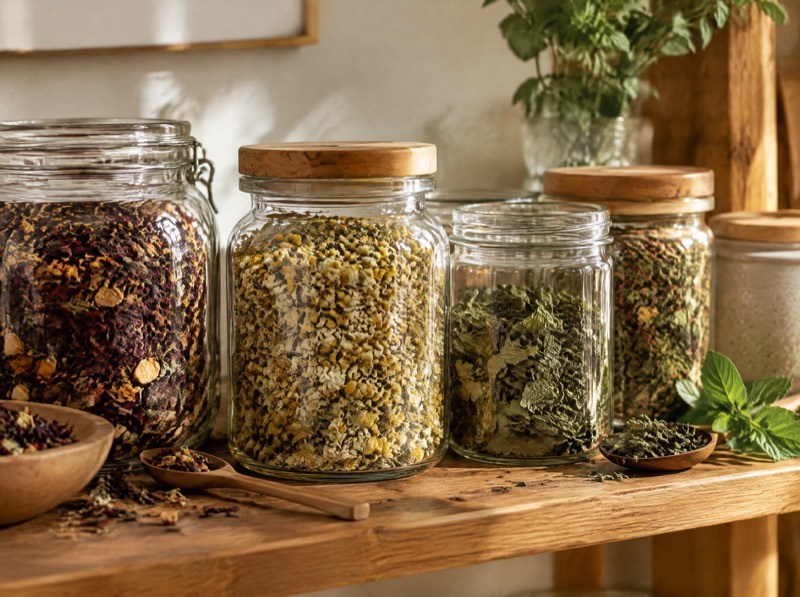
Chamomile, mint and a little know-how. The building blocks of a loose-leaf herbal blend, and the ratios that make them sing.
Most homemade herbal teas taste like the idea of the herb rather than the herb itself: thin, pale, slightly disappointing. The fix is not more leaves. It is better blending — a base, an accent, and a finish, in the right proportions.
The base, the accent, the finish
Think of a blend in three parts. The base (about 70%) carries the body and the flavour you want to taste first: chamomile, peppermint, lemon verbena, rooibos. The accent (about 20%) adds a second note — lemon balm, hibiscus, ginger, fennel. The finish (about 10%) is aromatic: rose, lavender, a pinch of liquorice root, a little dried orange peel.
Three beginner blends
Evening: chamomile 70, lemon balm 20, lavender 10. After dinner: peppermint 70, fennel 20, ginger 10. Fruity: hibiscus 60, rosehip 30, orange peel 10. Steep each for five to seven minutes in water just off the boil. Boiling water scalds delicate petals; tepid water leaves the roots and seeds pale.
Measure by weight, not by eye
Herbs differ hugely in density: a tablespoon of chamomile is a fraction of the weight of a tablespoon of rosehip. Weigh the parts if you want a blend you can repeat. Keep notes — the best blend in the shop was the result of three attempts and a scribbled recipe.
Storage
Keep blends in a sealed jar, away from light and heat. Use within six months; beyond that they are not harmful, just tired. Label with the date and the recipe, because you will not remember in March.
Taste as you go
Blend a small batch, brew it, taste it, adjust. Too flat? More accent. Too loud? More base. Too dusty? Add the finish. The whole craft is in the tasting, and it takes an afternoon to learn.