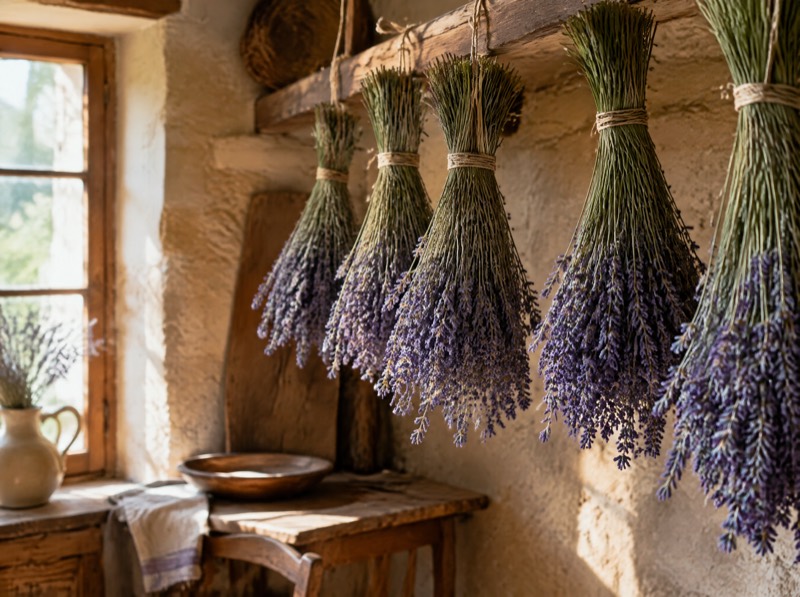
The most useful herb in the shop. How to grow lavender that flowers hard, dry it so it keeps its colour, and use every part of it.
Lavender is the workhorse of the botanical shop: it scents tea, fills sachets, dries beautifully and smells like summer for years. But it is also the plant most often grown badly — planted in rich soil, watered kindly, and rewarded with a leggy, sulky shrub that flowers once.
Grow it mean
Lavender wants what most herbs want: sun, sharp drainage and poor soil. A raised bed or a gravel mulch suits it perfectly. Do not feed it, do not compost it, and water only while it establishes. Rich soil produces soft, floppy growth and few flowers. Harsh conditions produce the tight, fragrant bush you actually want.
Prune for shape, not size
After flowering, cut the stems back by about a third — but never into the old bare wood, which rarely regrows. The aim is to keep the plant compact and green to the base. A lavender pruned annually will live a decade; an unpruned one becomes a woody mess in three years.
Drying for colour
Harvest just as the buds open — before the flowers are fully out, when the scent is strongest. Cut in the morning after the dew, bunch, and hang in a dark, airy room. Light fades the purple faster than anything. Dried at the right moment and kept dark, lavender holds its colour for a year or more.
Using every part
The buds go into tea, sachets, bath salts and shortbread. The stems make excellent kindling and firelighters — they smell wonderful in a wood stove. The dried flowers can be stripped into potpourri or ground into a fine powder for soap. Nothing is wasted, which is the whole point of a botanical shop's favourite plant.
A word on varieties
English lavender (Lavandula angustifolia) is the one for scent and cooking: sweeter, hardier, earlier. French and Spanish lavenders flower longer and look bolder but smell sharper and are less hardy. For a small garden, plant English, and plant more than you think you need.