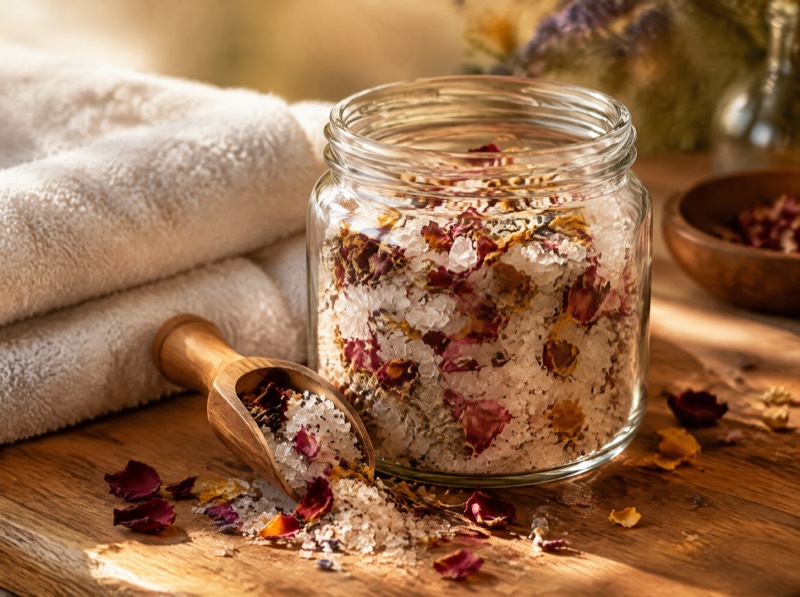
Epsom, Himalayan, dried petals and a good jar. The easiest botanical product to make — and the easiest to make badly. The simple method.
Bath salts are the gateway craft of the botanical shop: three ingredients, ten minutes, and a gift that looks far more expensive than it is. They are also easy to make badly — clumpy, scented like a candle shop, and staining the bath. The difference is proportion and patience.
The salts
Epsom salt (magnesium sulphate) is the classic for soaking. Himalayan pink salt adds colour and trace minerals. A good base is two parts Epsom to one part Himalayan — or all Epsom if you want a clean white. Avoid table salt: it is fine for the bath but does nothing, and it makes the mix look cheap.
The scent
Essential oils, not fragrance oils, if you want the botanical claim to be honest. Lavender and chamomile for evening; peppermint and eucalyptus for morning; rose and geranium for something softer. Use about 10–15 drops of essential oil per 250 grams of salt — more is not better, and too much can irritate skin.
Keeping it dry
The enemy of bath salts is moisture, which makes them clump and shorten their shelf life. Mix in a dry bowl, add the essential oil a few drops at a time while stirring, and let the mixture air-dry for an hour before jarring. Add dried petals at the end, gently — too much stirring crushes them.
The jar and the label
A clean glass jar with a tight lid is perfect. Label with the scent and the date. Include a small wooden scoop if you are giving it as a gift — it turns a jar of salt into a ritual.
Using them
A handful under running water, a twenty-minute soak, and a rinse afterwards. That is the whole instruction. The rest is the pleasure of making something useful with your hands — which is, quietly, the point of the whole shop.